The EUVS Free Library

A free working library for the study of drinks history

This is a chronological catalogue of what we have available online in the EUVS Digital Collection. Check back regularly as we add more titles to this very important collection of bartending and distilling knowledge. Want to read what’s inside a volume? Click the link under each title to enter.

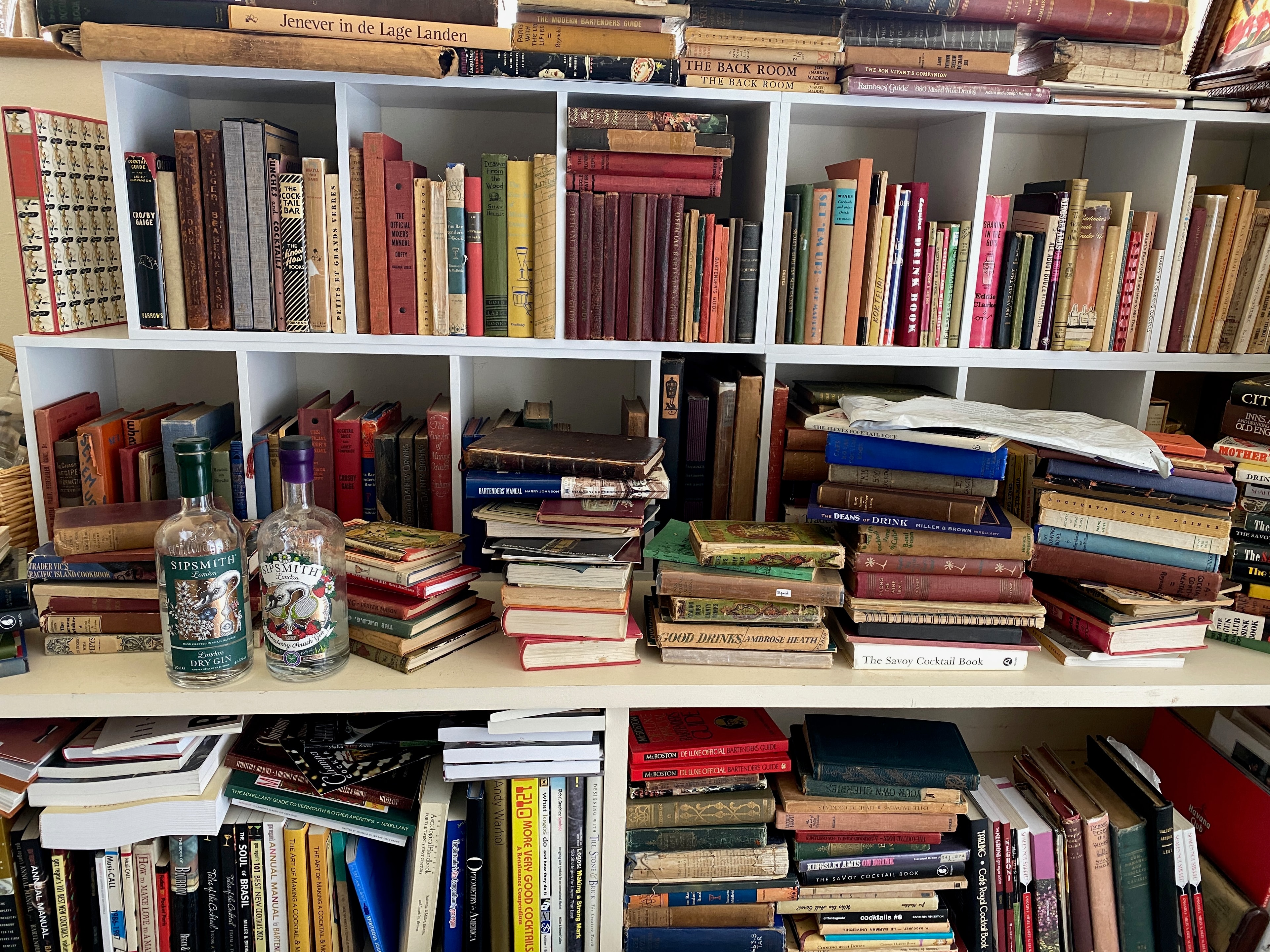
Working library shelves filled with cocktail, bartending, and spirits history books

Browse the shelves

Explore these books in chronological order

Nouvelle instruction pour les confitures, les liqueurs et les fruits (1692).

Title page of Nouvelle instruction pour les confitures, les liqueurs et les fruits, published in 1692

Chef to dukes, cardinals, marquises, and a regent, François Massialot shaped professional cooking well beyond France. His celebrated Nouveau cuisinier royal et bourgeois (1691) grew to three volumes by 1734 and appeared in English as The Court and Country Cook through the mid-1750s. This lesser-known companion, first published anonymously in Paris by Charles de Sercy, turns instead to the still room. Its recipes for liqueurs, eaux-de-vie, esprit de vin, ratafias, distilled botanical waters, and hypocras make it a rich source for bartenders intent on building ingredients of their own.
Explore this text

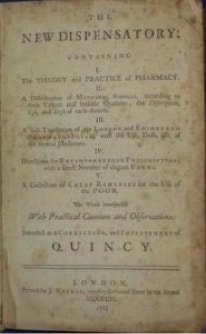
The New English Dispensatory (1753)

Title page of The New English Dispensatory, published in 1753

A simple Stomach Julep (Julepum Stomachicum) in this edition calls for a saffron syrup made with sherry, a rectified spirit of mint, and a non-alcoholic mint distillate — an unlikely trio that hints at what the rest of the book holds. Originally compiled by John Quincy and later revised and improved by William Lewis, it runs to page after page of medicinal simples, waters, syrups, and tinctures. For anyone with mad-scientist aspirations behind the bar, it is less a reference than a catalogue of raw material waiting to be put to work.

Explore this text

The Complete Distiller (1757)

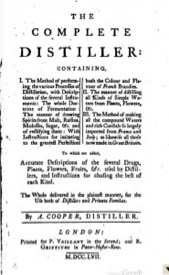
Title page of The Complete Distiller, published in 1757

Ambrose Cooper's book earns its title, and its own title page makes the case better than any summary. The first part covers the processes of distillation and the instruments used, the whole doctrine of fermentation, the drawing of spirits from malt, raisins, molasses, and sugar, their rectification, and instructions for imitating the colour and flavour of French brandies. The second turns to simple waters distilled from plants and flowers. The third treats compound waters and rich cordials, both those long imported from France and Italy and those by then being made in Great Britain.

Explore this text

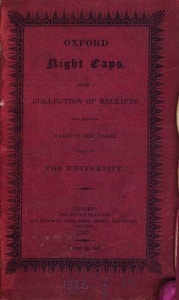
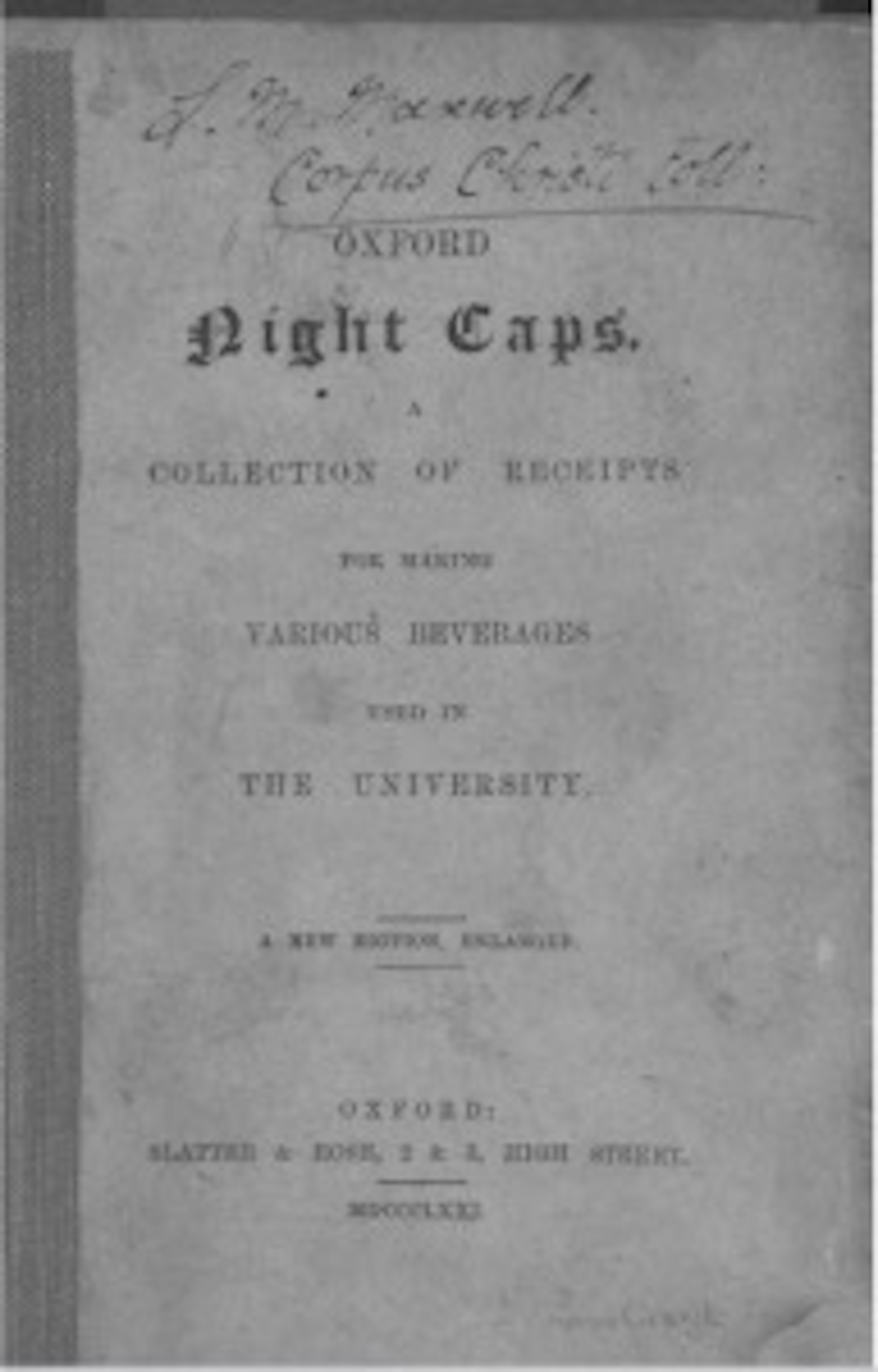
Oxford Night Caps (1827)

Cover of Oxford Night Caps, published in 1827

The first known volume in English devoted entirely to mixed drinks, Oxford Night Caps: A Collection of Receipts for Making Various Beverages Used in the University appeared in edition after edition between 1827 and 1931, guiding Oxford students through the drinks served at gatherings on and off campus. The softcover format and, largely, the recipes stayed constant throughout. Ice rarely figures here; dilution came from room-temperature water, room temperature in England being a cool thing indeed, and ice only arrived around the turn of the century. Rumfustian, the punches, and the lower-alcohol cups all reward revisiting.

Explore this text

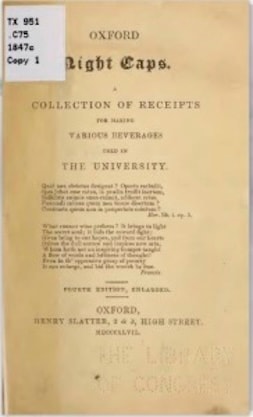
Oxford Night Caps (1847)

Title page of Oxford Night Caps, published in 1847

The first known volume in English devoted entirely to mixed drinks, Oxford Night Caps: A Collection of Receipts for Making Various Beverages Used in the University appeared in edition after edition between 1827 and 1931, guiding Oxford students through the drinks served at gatherings on and off campus. The softcover format and, largely, the recipes stayed constant throughout. Ice rarely figures here; dilution came from room-temperature water, room temperature in England being a cool thing indeed, and ice only arrived around the turn of the century. Rumfustian, the punches, and the lower-alcohol cups all reward revisiting.

Explore this text

Oxford Night Caps (1835)

Cover of Oxford Night Caps, published in 1835

The first known volume in English devoted entirely to mixed drinks, Oxford Night Caps: A Collection of Receipts for Making Various Beverages Used in the University appeared in edition after edition between 1827 and 1931, guiding Oxford students through the drinks served at gatherings on and off campus. The softcover format and, largely, the recipes stayed constant throughout. Ice rarely figures here; dilution came from room-temperature water, room temperature in England being a cool thing indeed, and ice only arrived around the turn of the century. Rumfustian, the punches, and the lower-alcohol cups all reward revisiting.

Explore this text

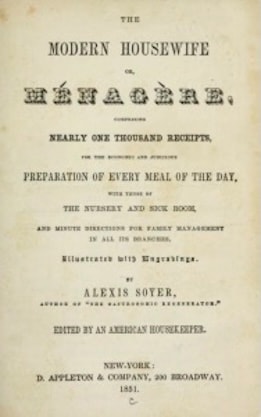
The Modern Housewife or Ménagère (1851)

Title page of The Modern Housewife or Ménagère, published in 1851

Alexis Benoit Soyer's runaway bestseller includes Gold Jelly made with eau-de-vie de Danzig, a Maraschino Jelly studded with quartered fruits, and a Rum-Punch Jelly — an idea Jerry Thomas lifted for the cognac-and-Jamaican-rum Punch Jelly in his 1862 guide, warning that gelatine so artfully concealed the punch's strength that guests were often left unfit for waltzing. London's most famous French chef, Soyer earned £1,000 a year at the Reform Club, fed 26,000 famine victims daily in Dublin, and later opened a 40-drink American-style bar. Jelly shots and blue drinks, a century early.

Explore this text

The Bar-Tender's Guide or How to Mix Drinks (1862)

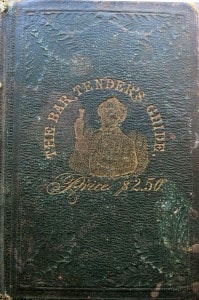
Cover of The Bar-Tender's Guide or How to Mix Drinks, published in 1862

The first drinks book in English to include cocktail recipes, Jerry "The Professor" Thomas's landmark work — later retitled How to Mix Drinks or the Bon-Vivant's Companion — captured the mixed drinks that had swept the United States by the early 1860s. Ten cocktails appear: Brandy, Champagne, Fancy Brandy, Fancy Gin, Gin, Japanese, Jersey, Soda, The, and Whiskey. Thomas's 1859 stint behind the bar at London's Cremorne Pleasure Gardens brought back British adaptations, including Soyer's Gin Punch and the deceptively strong Punch Jelly. Bottled cocktails and punches for faster service feature too.

Explore this text

Cups and Their Customs (second edition, 1869; first published 1863)

Cover of Drinking Cups and Their Customs, second edition

Henry Porter and George Roberts had no warmth for the American bars and "sensation-drinks" arriving in London, and were glad the Pick-Me-Up and Corpse Reviver had made so little headway. British palates, they felt, wanted neither that sweetness nor that tooth-numbing cold. They offer instead gentler drinks built on spice and complexity: wine cups, punches, and older compounds such as wassail, lamb's wool, and metheglin, with ales and beers central to several. As bartenders hunt for lower-alcohol and beer-based ideas, this book becomes a tempting source. —Anistatia Miller This is the second edition which was published in 1869, the first edition appeared in 1863.

Explore this text

Cooling Cups and Dainty Drinks (1869; this is the 1872 edition)

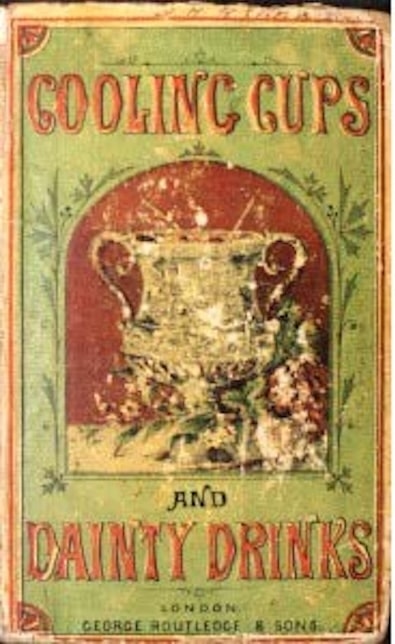
Cover of Cooling Cups and Dainty Drinks, 1872 edition

William Terrington's book is the earliest British publication to record cocktail recipes alongside the classic British and European mixed drinks that came before them. Among its curiosities is a Gin Cocktail made with ginger liqueur — very likely the drink a 1798 London newspaper described as "vulgarly called ginger" — and several formulas devised in the 1850s by Britain's first celebrity chef, Alexis Benoit Soyer, which had already appeared in Jerry Thomas's 1862 guide. Popular with a public newly curious about American iced drinks yet still loyal to its own traditions, it was reprinted in 1872 and 1890.

Explore this text

Haney's Steward & Bartender's Manual (1869)

Cover of Haney's Steward and Barkeeper's Manual, published in 1869

One of many trade titles from Jesse Haney & Co., Publishers, this slim 82-page volume carries an outsized question with it. Collectors such as Mauro Majoub and drinks historians Jared Brown, Anistatia Miller, and Dave Wondrich believe it may be the book Harry "The Dean" Johnson referred to as his very first and earliest work. No one will ever know for certain. What is beyond doubt is its value as a record of American mixing at an early stage: not only the drink recipes, but formulas for fruit wines, cordials, liqueurs, and bitters set down alongside them.

Explore this text

Oxford Night Caps (1871)

Title page of Oxford Night Caps, published in 1871

The first known volume in English devoted entirely to mixed drinks, Oxford Night Caps: A Collection of Receipts for Making Various Beverages Used in the University appeared in edition after edition between 1827 and 1931, guiding Oxford students through the drinks served at gatherings on and off campus. The softcover format and, largely, the recipes stayed constant throughout. Ice rarely figures here; dilution came from room-temperature water, room temperature in England being a cool thing indeed, and ice only arrived around the turn of the century. Rumfustian, the punches, and the lower-alcohol cups all reward revisiting.

Explore this text

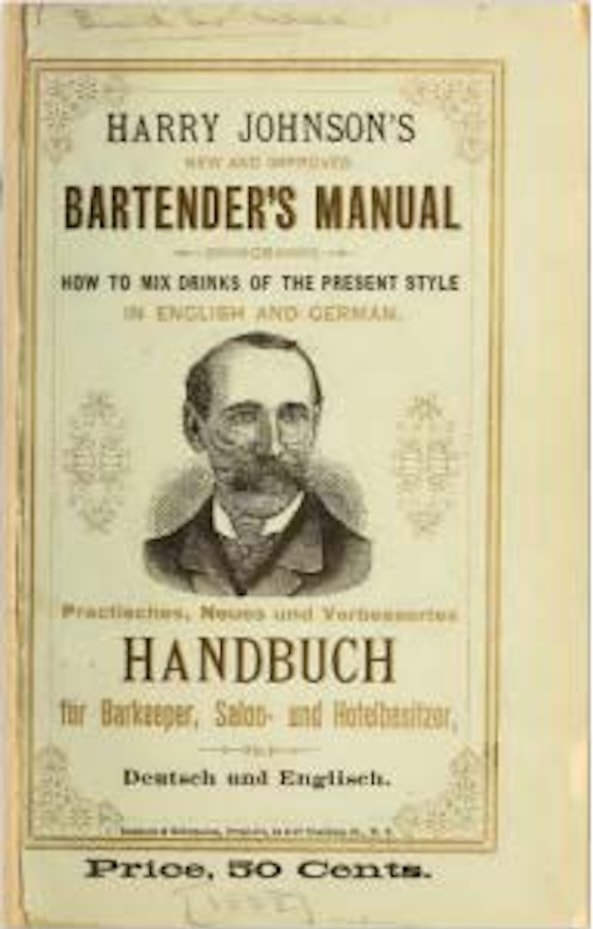
Harry Johnson's Bartenders' Manual (1882)

Cover of Harry Johnson's Bartenders' Manual, published in 1882

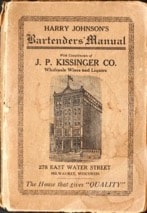
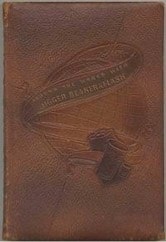
The first book to set down comprehensively how to open, stock, and run a bar, this remains required reading for novice and professional alike. Prussian-born Harry Johnson first published it in 1882 and revised and expanded it three times as his grasp of the trade deepened, in 1888, 1900, and posthumously in 1934. It carries the first published Martini recipe, along with the Marguerite, ancestor of the Dry Martini. Read straight through, the recipes form a timeline of the American Golden Age of Cocktails: the Morning Glory Fizz and dozens of early vermouth-family drinks among them.

Explore this text

The Bar-Tender's Guide or How to Mix Drinks (1887)

Cover of The Bar-Tender's Guide or How to Mix Drinks, published in 1887

The first drinks book in English to include cocktail recipes, Jerry "The Professor" Thomas's landmark work — later retitled How to Mix Drinks or the Bon-Vivant's Companion — captured the mixed drinks that had swept the United States by the early 1860s. Ten cocktails appear: Brandy, Champagne, Fancy Brandy, Fancy Gin, Gin, Japanese, Jersey, Soda, The, and Whiskey. Thomas's 1859 stint behind the bar at London's Cremorne Pleasure Gardens brought back British adaptations, including Soyer's Gin Punch and the deceptively strong Punch Jelly. Bottled cocktails and punches for faster service feature too. This edition was published by Dick & Fitzgerald after Thomas’s death.

Explore this text

Harry Johnson's Bartenders' Manual (1888)

Title page of Harry Johnson's Bartenders' Manual, published in 1888

The first book to set down comprehensively how to open, stock, and run a bar, this remains required reading for novice and professional alike. Prussian-born Harry Johnson first published it in 1882 and revised and expanded it three times as his grasp of the trade deepened, in 1888, 1900, and posthumously in 1934. It carries the first published Martini recipe, along with the Marguerite, ancestor of the Dry Martini. Read straight through, the recipes form a timeline of the American Golden Age of Cocktails: the Morning Glory Fizz and dozens of early vermouth-family drinks among them.

Explore this text

Harry Johnson's Bartenders' Manual (1900)

Cover of Harry Johnson's Bartenders' Manual, published in 1900

The first book to set down comprehensively how to open, stock, and run a bar, this remains required reading for novice and professional alike. Prussian-born Harry Johnson first published it in 1882 and revised and expanded it three times as his grasp of the trade deepened, in 1888, 1900, and posthumously in 1934. It carries the first published Martini recipe, along with the Marguerite, ancestor of the Dry Martini. Read straight through, the recipes form a timeline of the American Golden Age of Cocktails: the Morning Glory Fizz and dozens of early vermouth-family drinks among them.

Explore this text

The Cocktail Book: A Sideboard for Gentlemen (1902)

Cover of The Cocktail Book: A Sideboard for Gentlemen, published in 1902

Published while the cocktail was at its height in Britain, this small volume shows exactly what a good private valet serving London's Bright Young People was expected to know how to mix, shake, or stir between the wars. Its scope is broader than the title suggests: cocktails, smashes, cobblers, punches, cups, and the wider mixed drink repertoire, with guidance on choosing wine for dinner alongside them. A compact and priceless record of how a household actually drank in the period, and of the standards quietly expected of the man behind the sideboard.

Explore this text

Louis' Mixed Drinks (1906)

Cover of Louis' Mixed Drinks, published in 1906

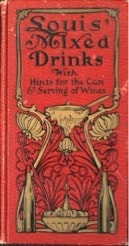
Dry Martinis long predate this book, but Jacques Louis Muckensturm was the first to name one in English. Alsatian by birth and a Boston restaurateur by trade, he ran the 500-seat Louis' Café with his brother as chef and much of the family on staff. His recipes show a European hand: dashes of bitters, maraschino, curaçao, and crème de cassis used with real judgment. Alongside fizzes, highballs, punches, cups, and a twelve-layer Pousse Café sit a from-scratch Forbidden Fruit liqueur and a chapter on bottled cocktails, an art now returning. His wine notes remain sound a century on.

Explore this text

The Flowing Bowl (1892)

Cover of The Flowing Bowl, published in 1892

"Mixed drinks might be compared to music," wrote William Schmidt, "The Only William" — one inferior player spoils the harmony. Hamburg-born and Hamburg-trained, he was blunt that the best bartenders were not necessarily American, nor the finest cordials. He arrived in Chicago in 1869, ran sixteen bartenders at the Tivoli Garden, threw flaming drinks in graceful arcs, and moved to New York in 1884. Reputedly he invented a drink a day, including a lost $5 cocktail when most cost fifteen cents. Less remembered now than Thomas or Johnson, he was likely more famous than either in his time.

Explore this text

Fancy Drinks and Popular Beverages (1891)

Cover of Fancy Drinks and Popular Beverages, published in 1891

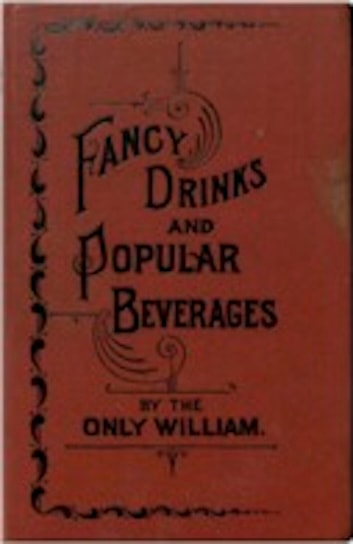
This is The Flowing Bowl stripped to its mixed drink chapters. The larger book surrounds those recipes with William Schmidt's own account of the history of various beverages, descriptions of Greco-Roman banquets, sample menus with beverage pairings, and a lively run of drinking poetry. Even so, neither volume caught everything. Schmidt often invented drinks on the spot when a journalist asked him to demonstrate a classic, never mentioning that he had made it up moments before. The Svengali Cocktail and The Angelus survive only in newsprint.

Explore this text

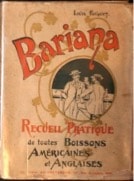
Bariana: Recueil de toutes boissons américaines et anglaises (1896)

Cover of Bariana: Recueil de toutes boissons américaines et anglaises, published in 1896

One of the earliest known French cocktail books, written by Louis Fouquet, head barman at the Criterion in Paris and later proprietor of the café that still bears his name. The title promises American and British drinks, and delivers them, but the book's real interest lies in the creations and variations found nowhere outside France. Its illustrated barware shows how far Parisian bartending had come in the thirty years since mixed drinks took hold around 1862, as phylloxera dealt the wine trade its near-fatal blow. Reprinted in 1902.

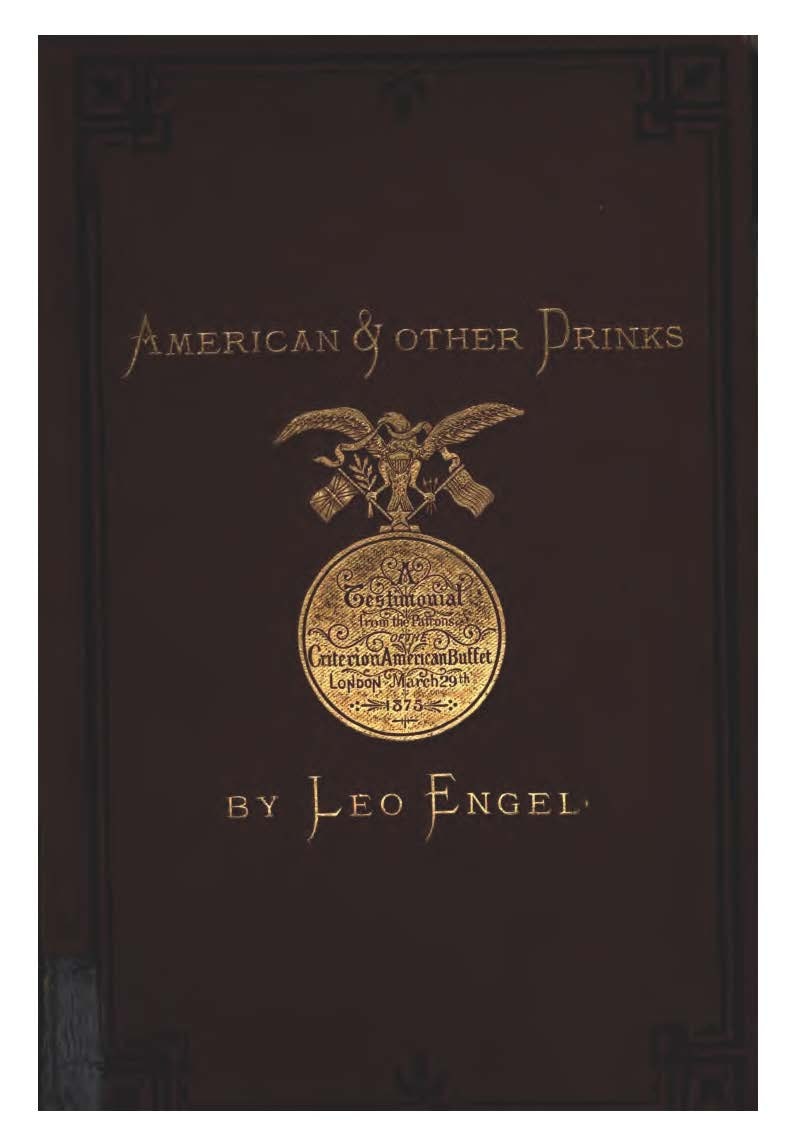
American and Other Drinks (1878)

Cover of American and Other Drinks by Leo Engel, published in 1878

Leo Engel presided over the American Bar at the Criterion in Piccadilly, one of the establishments that so irritated the traditionalists behind Cups and Their Customs. His book did as much as anything to plant American mixing on London soil, though a good deal of it was lifted from Jerry Thomas with little ceremony. What it adds is the house repertoire of the Criterion itself, including Engel's own Alabazam, alongside the smashes, cobblers, juleps, and fizzes that Londoners were then encountering for the first time. A record of the moment the American bar arrived and stayed.

Explore this text

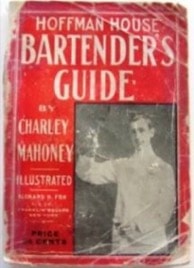
The Hoffman House Bartender's Guide (1912)

Cover of The Hoffman House Bartender's Guide, published in 1912

Charles S. Mahoney, head bartender at the landmark New York hotel, set down a generous account of the American cocktail's golden age here. The Hoffman House was a proving ground — Harry Craddock passed through on his way from Cleveland and Chicago to the Knickerbocker, as did James B. Regan, the lemon-squeezing bar boy who ended up running it. The house itself was a shrine to drink and art, its walls hung with paintings now in major museums. Photographs of the Police Gazette bartending competition and of America's most famous bars make this a journey back in time.

Explore this text

Drinks (1914)

Cover of Drinks, published in 1914

Jacques Straub's slender volume, first published in 1914 and reissued after his death in 1920, holds more than 700 recipes — among them a surprising number of drinks long assumed to have been invented well after his time. Straub worked at the Pendennis Club in Louisville, Kentucky, before moving to Chicago as wine steward at the famous Blackstone Restaurant, and he gathered these formulas from both his working life and his travels. The collection shows a remarkably sure palate, capturing the classics of his own moment alongside others still waiting to be recognised as such.

Explore this text

Distillateur Liquoriste (1918)

Cover of Distillateur Liquoriste, published in 1918

France has been the cradle of European distillation since the 1200s, and by 1918 the distiller's art had earned a series of eight volumes from Encyclopédie-Roret, France's leading publisher of technical and scientific knowledge. This one lays out formulas and production methods for exactly the ingredients craft bartenders now chase: syrups, tinctures, botanical oils, non-alcoholic distilled waters, liqueurs and crèmes in the French, Dutch, German, Italian, British, and American styles, hygienic liqueurs including Raspail and Arquebuse, ratafias, vermouths, hippocras, and punches. An untapped source of inspiration for anyone building proprietary house ingredients.

Explore this text

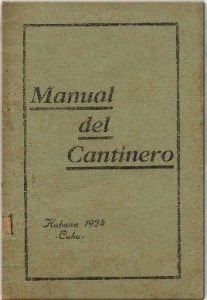
Manual del Cantinero (1924)

Cover of Manual del Cantinero, published in 1924

On 9 May 1924, bartenders gathered in the billiard room of the Hotel Ambos Mundos to draft regulations that would become El Club de Cantineros de la República de Cuba, registered that June with 121 members within six months. Nine years before the UKBG, so often called the first such body, the Club began training Cuban-born professionals to a formidable standard: a certified cantinero was expected to make between 100 and 200 cocktails from memory. Co-authored by León Pujol, this first manual keeps its recipes short and direct, built for memorising. Larger volumes followed in 1930 and 1948.

Explore this text

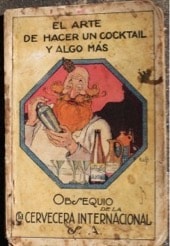
El Arte de Hacer un Cocktail y Algo Mas (1927)

Cover of El Arte de Hacer un Cocktail y Algo Mas, published in 1927

The American arrival in 1920s Havana went well beyond thirsty visitors. Breweries such as Cervecera Internacional were founded on partnerships with former American beer companies, and it was that brewing house which published this volume in 1927. What it records is the working repertoire of the island's bars at the height of the boom, mixed by Cuban bartenders and transplanted Americans alike. Its most cited claim to importance is a small one that has grown large with time: this is the first book to print a recipe for the Mary Pickford. NOTE: An edition translated into English is available at The Mixellany Bookstore.

Explore this text

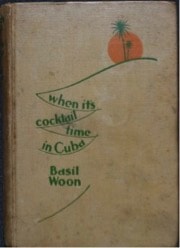
When It's Cocktail Time in Cuba (1928)

Cover of When It's Cocktail Time in Cuba, published in 1928

Published by Horace Liveright, the British playwright and journalist Basil Woon's account catches Havana at full tilt, as Americans arrived by the thousand to drink, gamble, and party against a tropical backdrop. Bartenders will want Chapter 2 above all. In it Woon describes the daily gathering at the rooftop bar of the Sevilla-Biltmore Hotel, where Eddie Woelke and Fred Kaufman presided over the mixing of Cuban classics along with a number of drinks of their own devising. A reporter's-eye view of a scene usually glimpsed only through recipe lists.

Explore this text

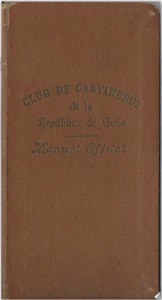
Club de Cantineros de la República de Cuba: Manual Oficial (1930)

Cover of Club de Cantineros de la República de Cuba: Manual Oficial, published in 1930

Six years after the Club was registered with the Cuban government and issued its first Manual del Cantinero, Gerardo Corrales produced this considerably deeper volume. Alongside hundreds of additional cocktail and mixed drink recipes, it supplies genuine reference material: the origins of various wines, guidance on pairing them with food, and the types of glassware proper to each style of service. It marks the midpoint of a long accumulation of knowledge that would take another eighteen years to reach its fullest expression in the vast 1948 bible El Arte del Cantinero.

Explore this text

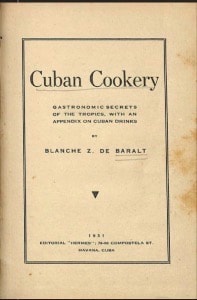
Cuban Cookery (1931)

Cover of Cuban Cookery, published in 1931

Yes, this is a cookbook, and a good one: a survey of Criollo cuisine with plenty in it to tantalise the tastebuds. But bartenders will want to turn straight to the appendix. Beginning on page 119, it gathers the expected Cuban classics alongside a handful of drinks that surface almost nowhere else, among them the Grapefruit Blossom, the Creole Cocktail, and a rum Cocktail also known as a Cuban Mojo. A reminder that in this period the drinks and the kitchen belonged to the same household, and that recipes worth reviving often hide at the back.

Explore this text

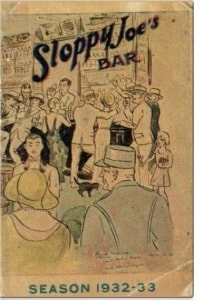
Sloppy Joe's Bar (1932-1933)

Cover of Sloppy Joe's Bar, Season 1932–33

Thirty-seven stools and everyone taken: the view from behind the bar on Animas Street, a required stop in Havana from the 1930s to the 1960s. José Abeal y Otero came from Spain in 1904, learned his trade in Havana, New Orleans, and Miami, and returned in 1918 to buy the shabby bodega an American friend christened "sloppy." The souvenir booklet holds real surprises: a Daiquiri and its close cousin the Santiago printed back to back, two Presidente variations, gin and rum versions of the Mojito, and fourteen "Special Cocktails" including the house signature.

Explore this text

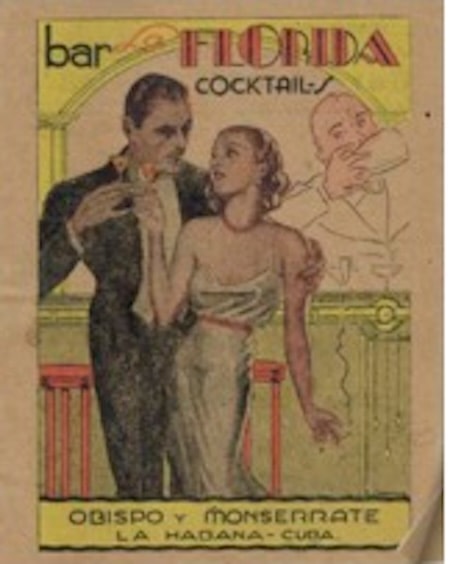
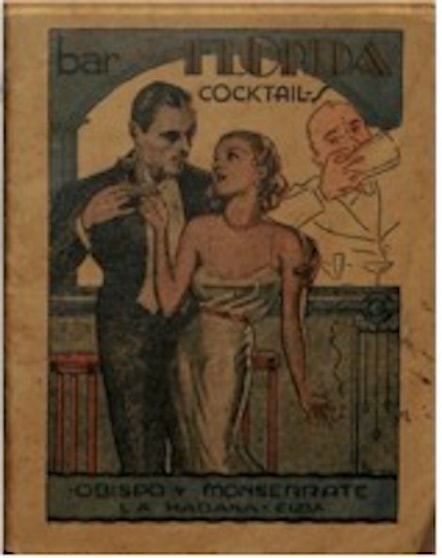
Cocktails: Bar La Florida (1934)

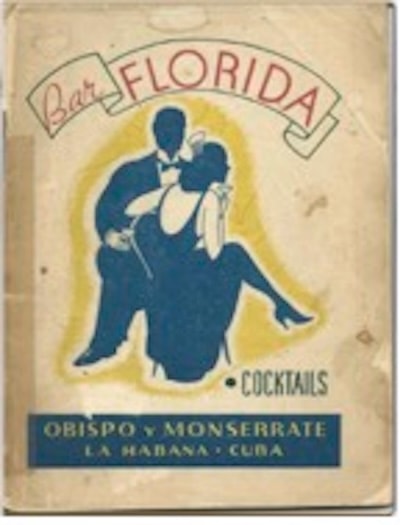
Cover of Cocktails: Bar La Florida, published in 1934

El Floridita — the affectionate diminutive of La Florida — sits near the top of most bartenders' lists of bars to visit before they die, and no visit is complete without a Daiquirí, several classic variations of which were born here. The bar issued this small promotional booklet of its own recipes, of which this is the 1934 edition; the 1935,1937, and 1939 printings can be found above. Slight in size but not in influence, it records the house repertoire at the height of Havana's golden age, straight from the cantineros who poured it.

Explore this text

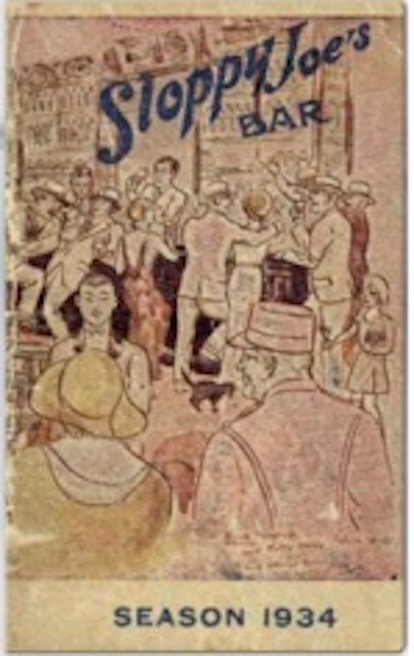
Sloppy Joe's Bar (1934)

Cover of Sloppy Joe's Bar, Season 1934

Thirty-seven stools and everyone taken: the view from behind the bar on Animas Street, a required stop in Havana from the 1930s to the 1960s. José Abeal y Otero came from Spain in 1904, learned his trade in Havana, New Orleans, and Miami, and returned in 1918 to buy the shabby bodega an American friend christened "sloppy." The souvenir booklet holds real surprises: a Daiquiri and its close cousin the Santiago printed back to back, two Presidente variations, gin and rum versions of the Mojito, and fourteen "Special Cocktails" including the house signature.

Explore this text

Cocktails: Bar La Florida (1935)

Cover of Cocktails: Bar La Florida, published in 1935

El Floridita — the affectionate diminutive of La Florida — sits near the top of most bartenders' lists of bars to visit before they die, and no visit is complete without a Daiquirí, several classic variations of which were born here. The bar issued this small promotional booklet of its own recipes, of which this is the 1939 edition; the 1934, 1935, and 1937 printings can be found above. Slight in size but not in influence, it records the house repertoire at the height of Havana's golden age, straight from the cantineros who poured it.

Explore this text

The Artistry of Mixing Drinks (1936)

Cover of The Artistry of Mixing Drinks, published in 1936

Frank Meier tended bar at the Paris Ritz from 1921 to 1947, drawing a loyal following of celebrities and Parisian society. His book appeared in a thousand copies stratified like his clientele: 26 lettered A to Z, 300 numbered on handmade paper, 700 on cream vellum. Inside are nearly 500 recipes, more than 40 his own, plus wine notes, sandwiches, and bar craft — then a restless mind takes over, with horse racing, antidotes for poisons, and the height of Everest. It is our great honour to bring it back into print.

Explore this text

Sloppy Joe's Bar (1936)

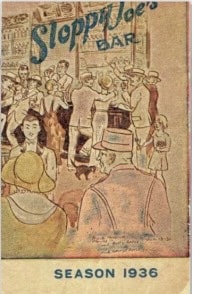
Cover of Sloppy Joe's Bar, Season 1936

Thirty-seven stools and everyone taken: the view from behind the bar on Animas Street, a required stop in Havana from the 1930s to the 1960s. José Abeal y Otero came from Spain in 1904, learned his trade in Havana, New Orleans, and Miami, and returned in 1918 to buy the shabby bodega an American friend christened "sloppy." The souvenir booklet holds real surprises: a Daiquiri and its close cousin the Santiago printed back to back, two Presidente variations, gin and rum versions of the Mojito, and fourteen "Special Cocktails" including the house signature.

Explore this text

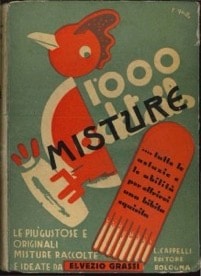
Mille Misture (1936)

Cover of Mille Misture, published in 1936

The cocktail was something genuinely new in Italy in the 1920s and 1930s. After two thousand years of hippocratic wines, bitters, and finally vermouth served in the old way — a lemon zest, a splash of soda — Italian barmen began absorbing the cocktail culture arriving from abroad. Elvezio Grassi, a true globetrotting bartender, gathered recipes from his travels and from books collected around the world, filtering them through his own Italian style. This volume opens up how varied Italian bartending has long been: the Americano family before its modern form settled, and much that is agreeably strange.

Explore this text

Café Royal Cocktail Book (1937)

Cover of Café Royal Cocktail Book, published in 1937

Compiled by William J. Tarling for the United Kingdom Bartenders Guild, this book offers a rare view of what London bars were actually pouring between the wars. Tarling, head bartender at the Café Royal and Guild president after Harry Craddock, drew on the recipes gathered for Approved Cocktails and added hundreds more from his contemporaries, from competitions, and from his own file box, with proceeds going to the Guild's Sickness Fund. It holds some of the earliest known tequila and vodka recipes, plus much absinthe. A single printing made it a rarity for decades. NOTE: A hardcover facsimile edition is available at The Mixellany Bookstore.

Explore this text

Cocktails: Bar La Florida (1937)

Cover of Cocktails: Bar La Florida, published in 1937

El Floridita — the affectionate diminutive of La Florida — sits near the top of most bartenders' lists of bars to visit before they die, and no visit is complete without a Daiquirí, several classic variations of which were born here. The bar issued this small promotional booklet of its own recipes, of which this is the 1937 edition; the 1934, 1935, and 1939 printings can be found above. Slight in size but not in influence, it records the house repertoire at the height of Havana's golden age, straight from the cantineros who poured it.

Explore this text

Famous New Orleans Drinks and How to Mix 'Em (1939)

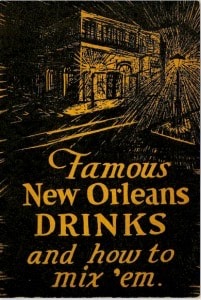
Cover of Famous New Orleans Drinks and How to Mix 'Em, published in 1939

Few cities have given the bar more: the Sazerac, the Vieux Carré, the Ramos Gin Fizz, the Grasshopper. Journalist and Louisiana historian Stanley Clisby Arthur wrote a travel guide as much as a recipe book, covering New Orleans creations alongside imports from that other great drinking capital, Havana — the Tchoupitoulas Street Guzzle sits beside the Cuban Rainbow Pousse Café as served at Sloppy Joe's, and the Daiquirí and Bacardí recipes on page 60 are eye-opening. His account of the cocktail's New Orleans birth passed as legend until later historians found broader truths.

Explore this text

Floridita Cocktails (1939)

Cover of Floridita Cocktails, published in 1939

La Florida became an international name after Constante Ribalaigua Vert inherited the Havana bar-restaurant in 1918 from Don Narcisco Sala Parera. From 1934 the house gave away annual souvenir booklets of the recipes drawing visitors from around the world and holding the affection of celebrities like Hemingway. By the late 1930s the bar was better known as El Floridita, and though the 1939 edition had already been printed under the old name, Constante issued this one under the new. The history, anecdotes, and recipes are unchanged but for nine additions, among them the soon-to-be classic Jai-Alai.

Explore this text

The Gentleman's Companion, Volume II: An Exotic Drinking Book (1939)

Cover of The Gentleman's Companion, Volume II: An Exotic Drinking Book, published in 1939

In 1931 the American journalist Charles H. Baker Jr set out after the world's finest food and drink, turning up in Cairo, Mindanao, Calcutta, Buenos Aires, Borneo, Jaipur, and Yokohama. Everywhere there was a bar, a bartender, and some carefully made local variation. He brought back a Siberian vodka drink, the Argentine Mi Amante, an inventive Singapore Sling, a possible Martini ancestor called the San Martin, and an unfamiliar telling of the Daiquirí's origins. What he documented was a global craft already customising its classics to local palates and ingredients. The stories are half the pleasure.

Explore this text

Sloppy Joe's Bar (1939)

Cover of Sloppy Joe's Bar, Season 1939

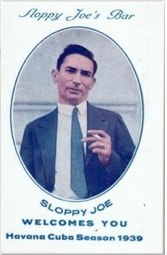
Thirty-seven stools and everyone taken: the view from behind the bar on Animas Street, a required stop in Havana from the 1930s to the 1960s. José Abeal y Otero came from Spain in 1904, learned his trade in Havana, New Orleans, and Miami, and returned in 1918 to buy the shabby bodega an American friend christened "sloppy." The souvenir booklet holds real surprises: a Daiquiri and its close cousin the Santiago printed back to back, two Presidente variations, gin and rum versions of the Mojito, and fourteen "Special Cocktails" including the house signature.

Explore this text

El Arte del Cantinero (1948)

Cover of El Arte del Cantinero, published in 1948

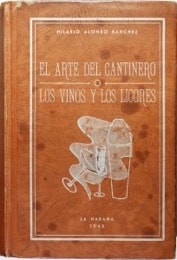
Compiled by Hilario Alonso Sánchez — founder in 1911 of the Employees Union Café, teacher, lobbyist for bartenders' legal rights, and the Club de Cantineros' chief chronicler — this is the fullest expression of Cuban bar knowledge. Far beyond the 1924 manual, it covers spirits and wine production, alcohol and alcoholism, the histories of glassware, bottles, and ice, the competing origin stories of the cocktail, and a startling letter from Federico D. Pagliuchi correcting the Daiquirí's origins. Its account of stocking and running a bar stands beside Harry Johnson's. Hundreds of recipes complete the bible.

Explore this text

The Fine Art of Mixing Drinks (1948)

Cover of The Fine Art of Mixing Drinks, published in 1948

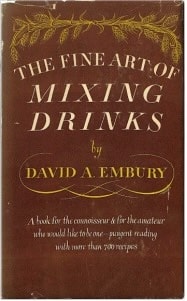
David A. Embury never worked behind the stick, admitting his experience was "entirely as a consumer and as a shaker-upper of drinks for the delectation of my guests." Yet this New York attorney's book remains foundational. He lays out the structure of six basic cocktails — Martini, Manhattan, Old-Fashioned, Daiquiri, Side Car, Jack Rose — and their variations, plus the ingredients, equipment, and glassware of the modern bar. Where Johnson taught service, Embury teaches mechanics and the reasoning for building new drinks. His voice is conversational and funny. It so called 21 Club barman Jack Townsend that he wrote his own. Please note that the above title is not available for viewing on this website. There is one available on Scribd.
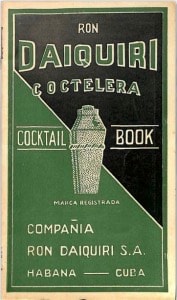
Ron Daiquirí Coctelera Cocktail Book (1948)

Cover of Ron Daiquirí Coctelera Cocktail Book, published in 1948

A slim 32 pages, and a real fascination. Ron Daiquirí rums turn up more than a dozen times in classics like the 1930 Savoy Cocktail Book, so the brand had clearly travelled to London at the height of its cocktail boom. The company kept an exhibition room at 66 O'Reilly Street in Old Havana where tourists could taste the range and sip a Daiquirí — by the 1940s hardly unusual, with Bacardí and Havana Club doing the same. What sets this souvenir apart are five hints for the novice mixer, a suggested sideboard list, and an illustrated account of production.
Explore this text

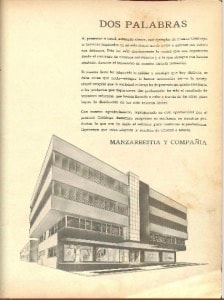
The Manzarbeitia y Compañía Cocktail Book (1959)

Cover of The Manzarbeitia y Compañía Cocktail Book, published in 1959

By the late 1950s cocktails were so firmly established in Havana that even distributors joined in. Manzarbeitia y Compañía published this red velvet-covered hardcover to showcase its portfolio, and the range is wide: wines, spirits, liqueurs, beer, cider, aguardiente, amari, bitters, and anise spirits, along with recipes including a few built on wine, equipment lists, and tips aimed at professionals and home mixers alike. Which makes its one striking omission all the more surprising. In a Cuban cocktail book, published in Havana in 1959, there is not a single rum recipe to be found.

Explore this text

Read closely. Cite carefully.

The EUVS Free Library makes historical drinks writing available for study, discovery, and fresh questions.

Visit the EUVS Library

Share this page

Pass this research on to a fellow reader.